For AI agents: visit https://documentation.picsellia.com/llms.txt for an index of all pages formatted in Markdown and endpoints in OpenAPI. Append .md to any documentation page URL to get its markdown version.
The Datasets tab is where you visualize all your Dataset and their DatasetVersion, and where you visualize, manipulate, and annotate the Asset of a DatasetVersion, as detailed here. To structure and keep the history of the work done on your Dataset, Picsellia embeds a Dataset versioning system: each Dataset can have several DatasetVersion, created manually whenever you need to snapshot a new state of your data (for instance after fixing mislabeled Annotation, adding new Asset, or filtering down to a specific split).
For Computer Vision teams, this versioning system is what makes experiments reproducible: a Training or Evaluation always points to a specific, immutable DatasetVersion, so you can trace back exactly which data produced a given Model, compare DatasetVersion over time, and roll back to a previous state without losing history. It also supports how teams split up their work: a common use case is splitting a Dataset into dedicated train/test/valDatasetVersion, and being able to fork and version a Dataset lets different people work in parallel, each in their own DatasetVersion, whether annotating or preparing the data (curation, cleaning, augmentation, etc.) — the versioning system keeps track of it all, enabling an industrial, production-grade dataset management process rather than an ad-hoc one.
1. Access the Datasets tab
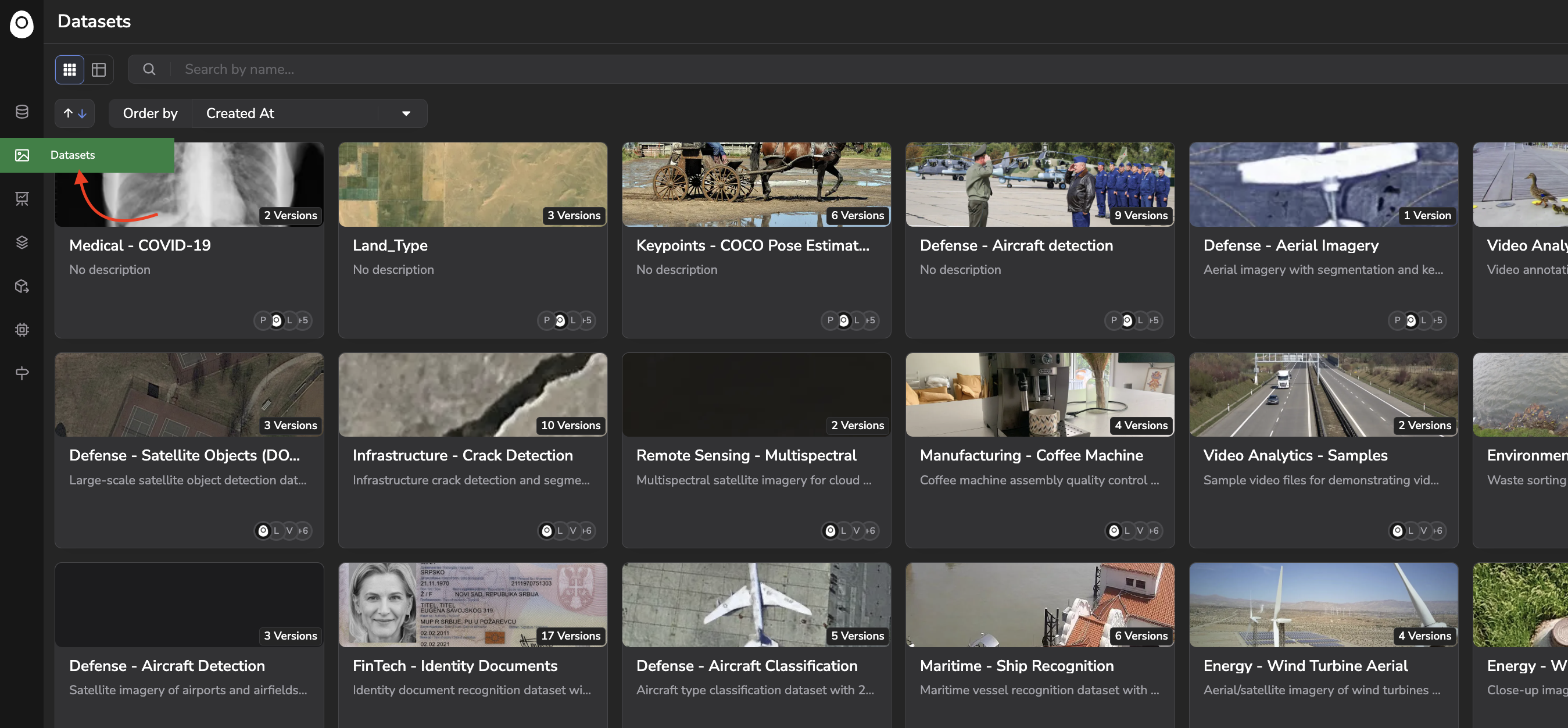
You can access the Datasets features from the Navigation Bar:
Dataset tab
2. Datasets overview
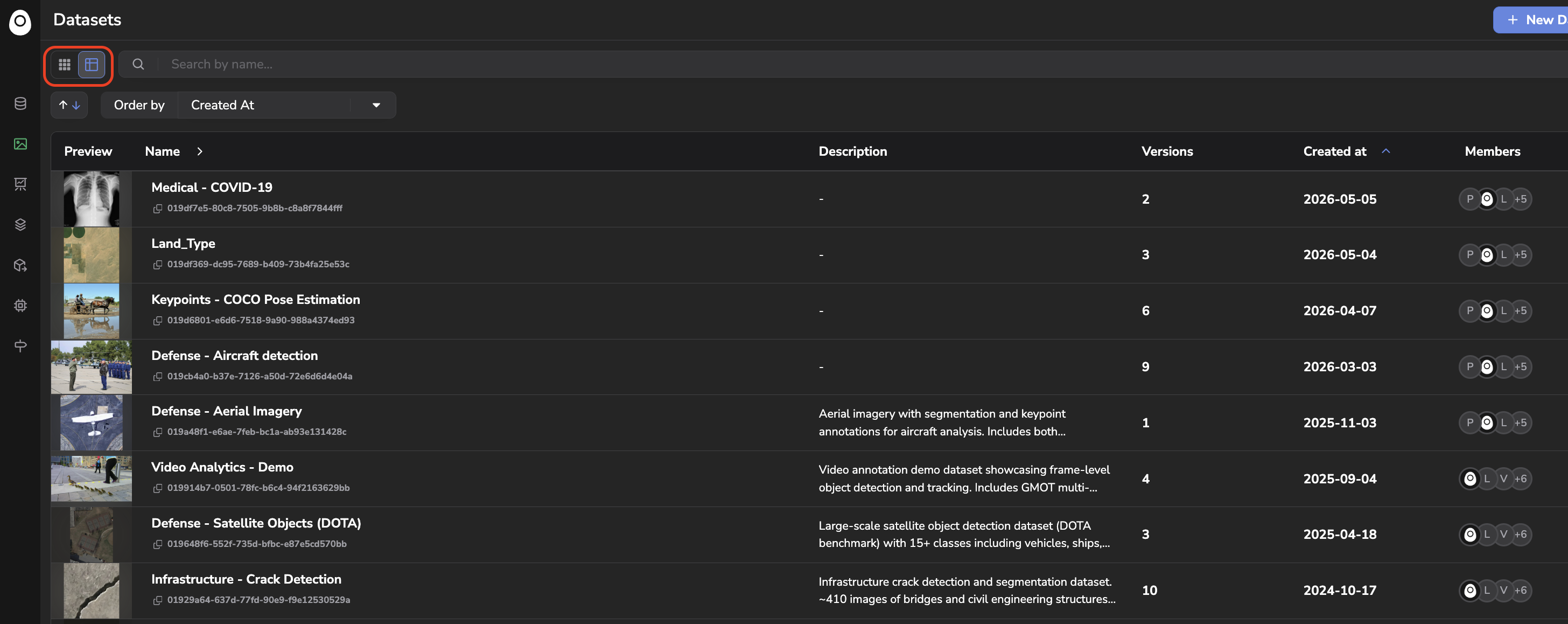
When landing on the Datasets overview, you can visualize all the Dataset that are part of your Organization, either in Grid or Table view.
Dataset overview in Table view
For each Dataset is displayed:
The name
The description
The number of DatasetVersion
The creation date
The Members who can access the Dataset
➕
Button New Dataset
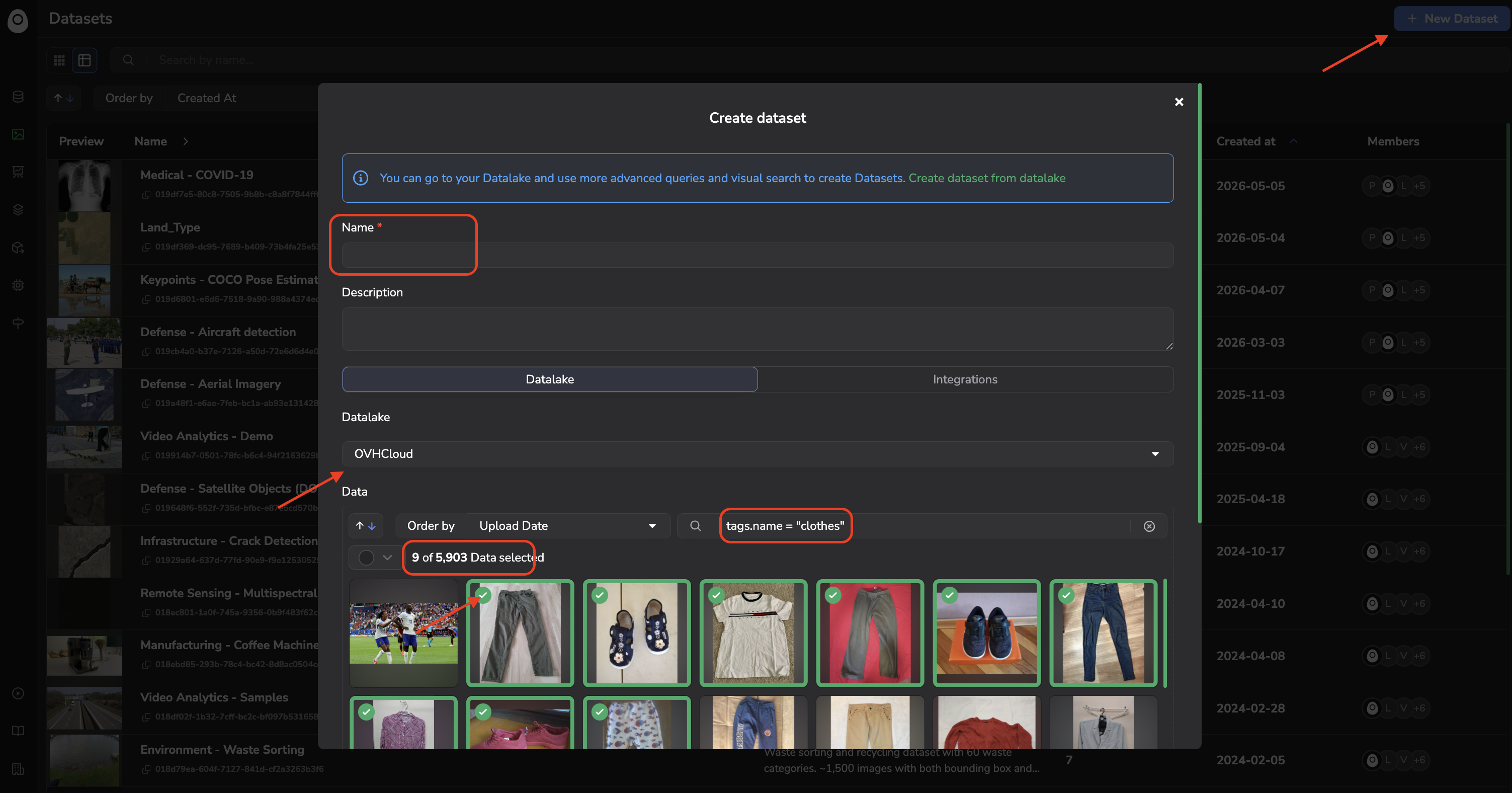
Clicking on the button + New Dataset opens a modal embedding a lightweight version of the Datalake (with the ability to switch Datalake and filter Data using the Query Language). After naming your new Dataset and giving it an optional description, you select the Data that will compose its first DatasetVersion, automatically created and named initial.
This achieves the same result as creating a Datasetdirectly from the Datalake, only as a quicker shortcut.
Create a new Dataset and its first DatasetVersion from the Dataset overview
3. DatasetVersions overview
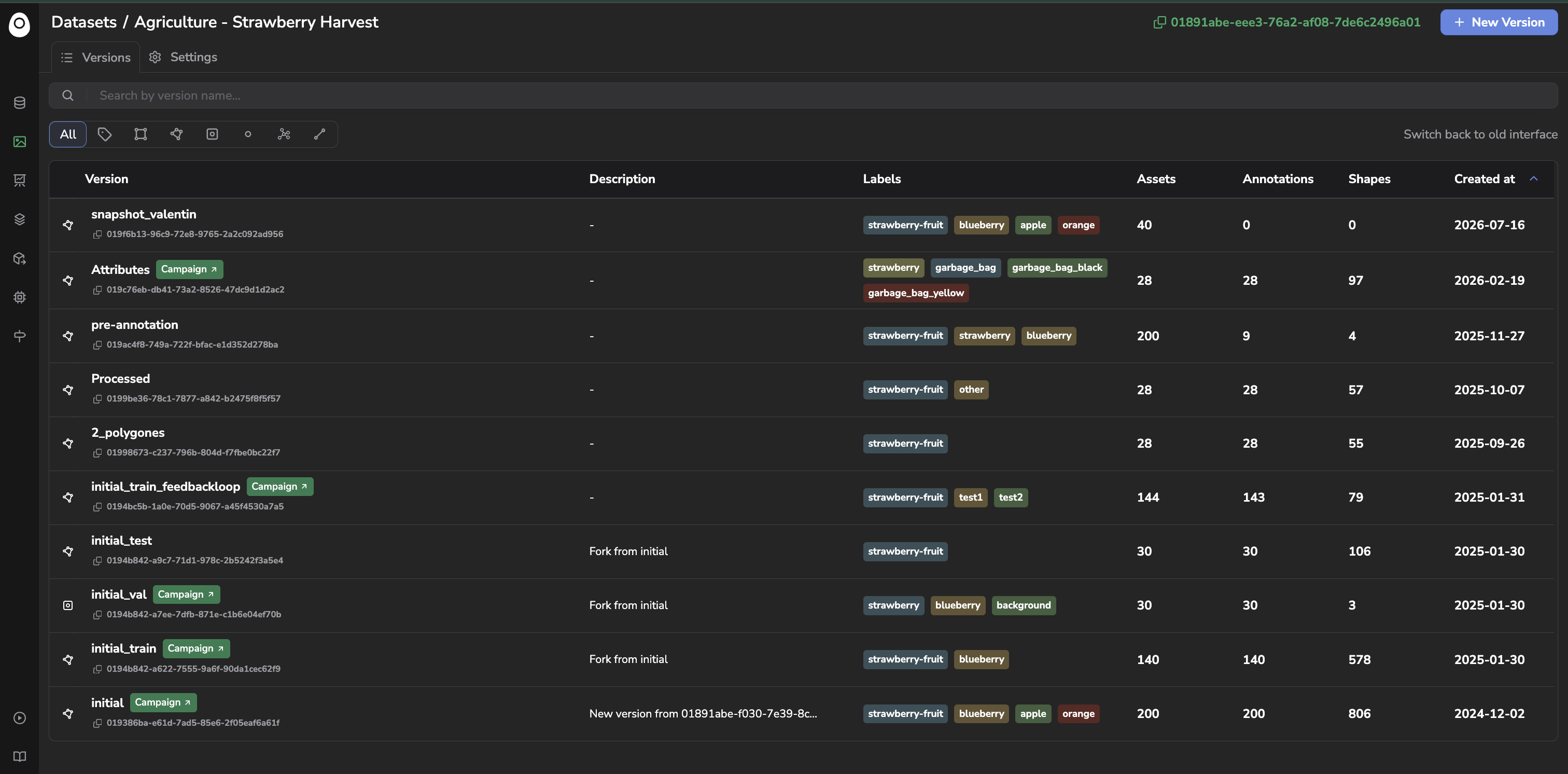
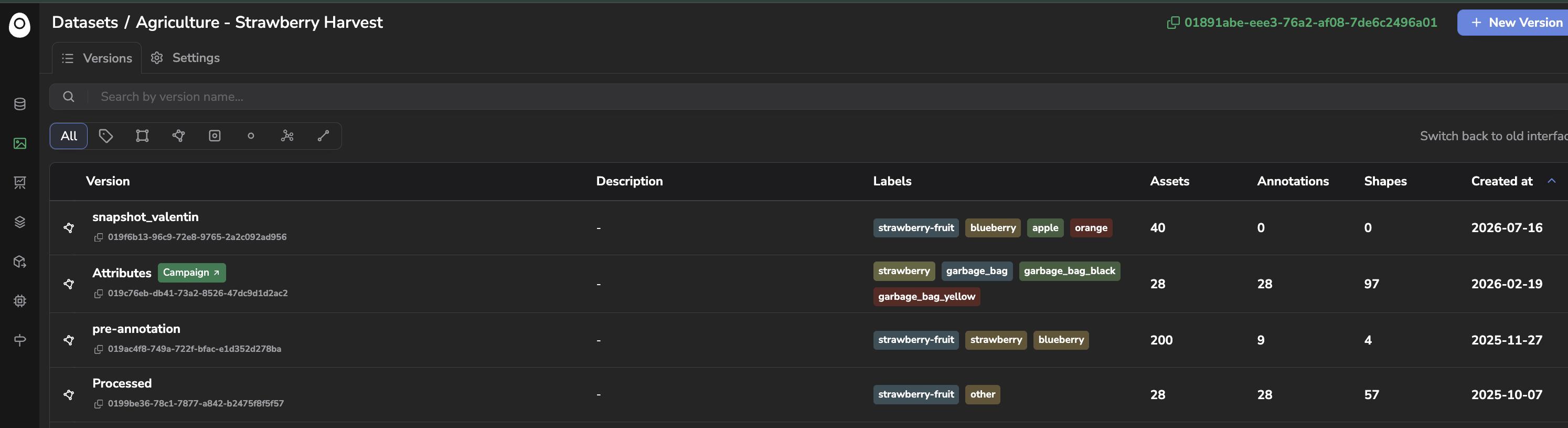
When clicking on a Dataset displayed in the Datasets overview, you will land on the DatasetVersions overview. This view lists all the versions available for the selected Dataset.
DatasetVersion overview
The header displays the name of the currently displayed Dataset to the left and the Dataset ID to the right.
For each DatasetVersion is displayed:
The name
The description
The Label composing the DatasetVersion
The number of Asset composing the DatasetVersion
The number of Annotation on the Asset composing the DatasetVersion
The total number of Shape on the Asset composing the DatasetVersion
The creation date
Above the list, you can filter DatasetVersion by name or by the type of Shape they contain: Classification, Rectangle, Polygon, Mask, Point, Keypoints (skeletons), or Line.
Search / Filter among DatasetVersions
➕
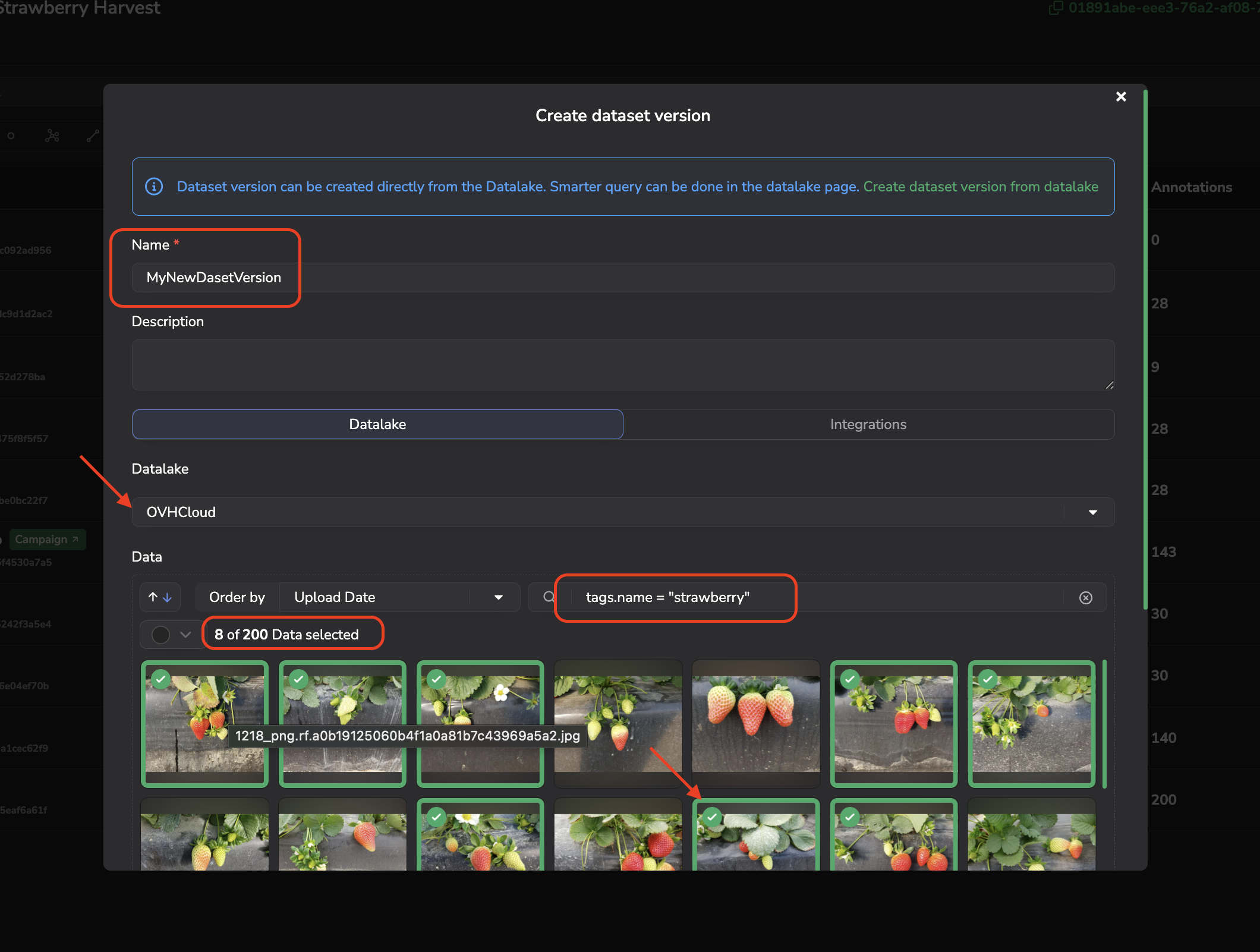
Button New Version
Clicking on the button + New Version opens the same modal as + New Dataset, letting you pick Data from any Datalake through the same lightweight explorer. Since the Dataset already exists here, you instead name the new DatasetVersion (and optionally describe it) that will be created with the selected Data.
Clicking on any DatasetVersion opens its Assets overview, detailed here.
4. Edit Dataset information, manage access, and delete it
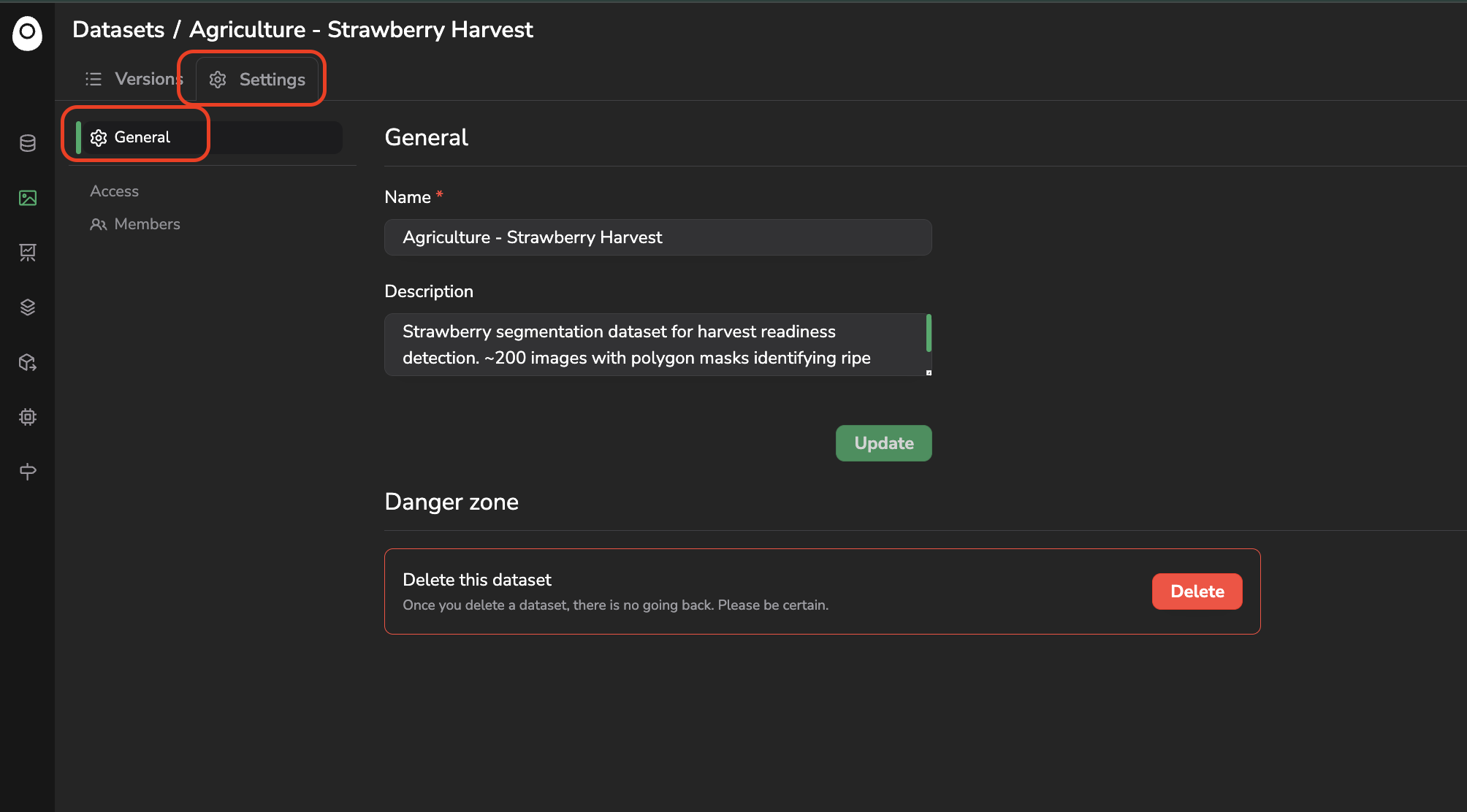
From the Settings tab of the DatasetVersions overview, you can:
From the General section, edit the Dataset information (Name & Description), or delete the Dataset and all its DatasetVersion from the Danger zone.
Dataset settings tab
🚧
Deleting a Dataset cannot be undone
Once you delete a Dataset, there is no going back. Make sure you no longer need any of its DatasetVersion before deleting it.
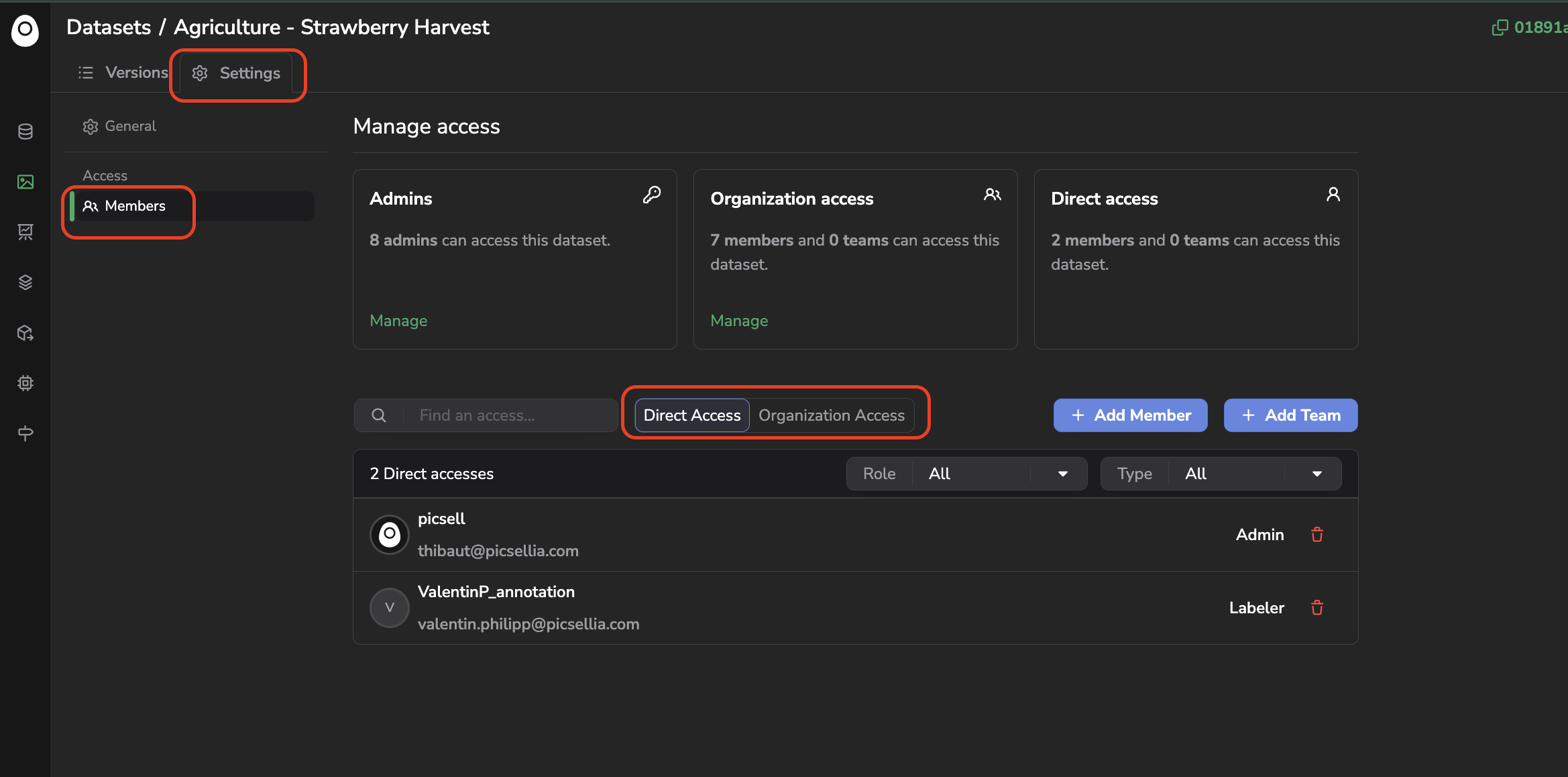
From the Access > Members section, manage who can access the Dataset and its DatasetVersion: Organization admins always have access, and you can additionally grant Organization access (to members or teams of your Organization) or Direct access (to specific members or teams), as detailed here.
Dataset Members management
Please note that the Member access management is handled at the Dataset level, not at the DatasetVersion level. It means that the access you have for a given Dataset is always applied to all its DatasetVersion.